False information around voting generates confusion and fear.
Whether it’s through social media, text messages, television, podcasts, or through conversations in community, we must be proactive in learning how to stop false information before it spreads.
Types of False Information
- Misinformation is shared information believed to be true but is actually false.
- Disinformation is shared information known to be false but is deliberately shared anyway.
How to Spot False Information
False information can sometimes be hard to spot, especially with the growing use of AI generated messaging and content. But there are a few steps you can take to help you and your community know when something might be false information.
- Be skeptical! If you can’t verify it, don’t share it. Common indicators of false information are:
- Someone claims to have “insider” knowledge or information
- The original post has been removed
- Content is likely to discourage people to vote and doesn’t offer reliable solutions to a problem
- Consider the source. Ask yourself:
- Does this information have a verifiable source?
- Does the information exist on more than one news outlet or information platform?
- Beware of the “copy and paste and pass it on” social posts!
- This is a red flag that the post’s origin is being deliberately obscured.
- Try looking up keywords or terms to confirm its accuracy.
- Do NOT rely on AI generated search results for information around polling locations, hours, voting laws, or candidate information. Instead, go directly to the source.
- Visit candidate websites to learn more about the issues they are running on.
- Look up state statutes for voting rights and information
- Use the Secretary of State, Attorney General, and State Election Board websites to find information on voting deadlines, registration, and polling locations.
- Watch out for AI-generated images or videos
- Check if the social media platform has flagged the post as containing AI content
- Look at people’s anatomy (hands, feet, etc.). AI sometimes has a hard time generating this type of content
- Check for misspelled words or logos
- Look for wavy lines, shadows, or blurry content where you wouldn’t expect to see them
- Run a reverse image search to try and locate the original source
- REMEMBER: Even if these things all check out, the image or video could still be AI-generated. Always confirm information with a secondary source before sharing.
Example of a realistic AI-generated image:
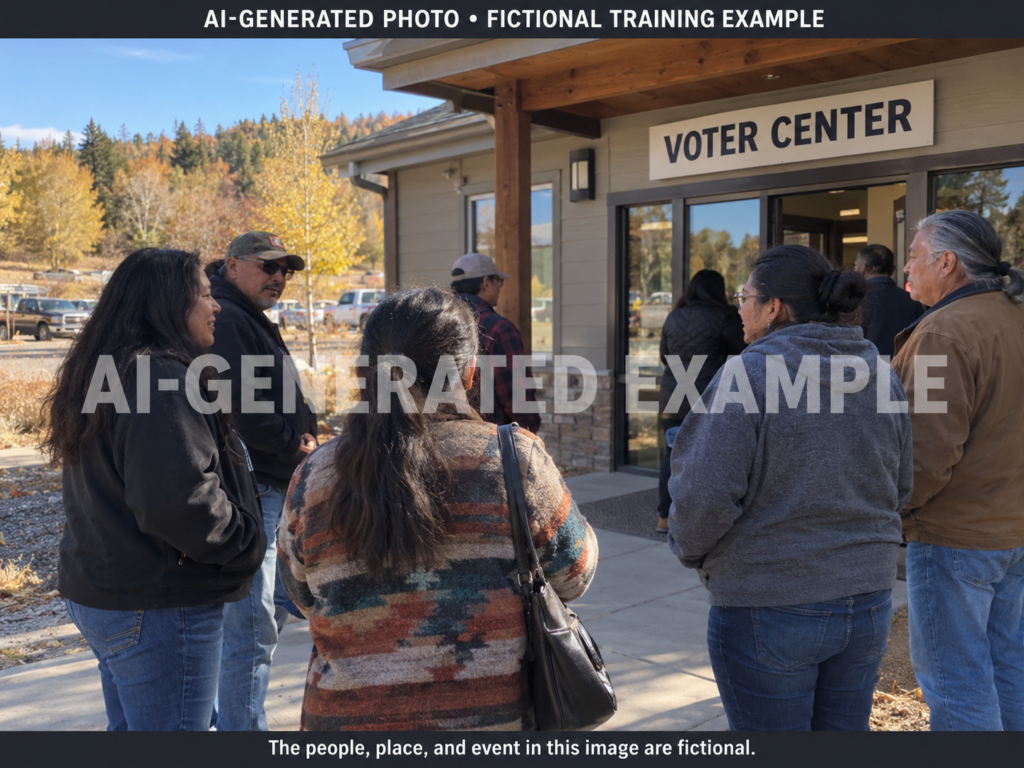
Images like this could be paired with messaging that claims there are long lines at a polling location, which could directly discourage people to turn up to the polls and vote. Always double check the content through a trusted source.
How to Respond to False Information
Do NOT repeat the false information when debunking it. Instead:
- Start with a shared value to connect with the person
- Name the person spreading false information, their intent, and their motivation
- Connect the dots and affirm what the outcome should be
Example of how debunking looks:
- “Voters get to decide who represents us.
- But some people are trying to prevent voters from being heard because they know they don’t have the voters’ support, and they want to hold on to power
- This is just a tactic to deny the will of the people, but we will make sure that everyone votes and every vote is counted”
Are you seeing false information being spread at the polls or through AI-generated content?
If so, report it to Native American Rights Fund and call 866-OUR-VOTE.
Recommend a resource.
Your input is valuable. Help us continue to grow this hub for our community by submitting a resource through our online form.